Power infrastructure developed around the data center load.
AI and cloud campuses need firm, high-capacity power that grid interconnection can be slow to deliver; we procure the technology from third-party vendors and develop the on-site pathway.
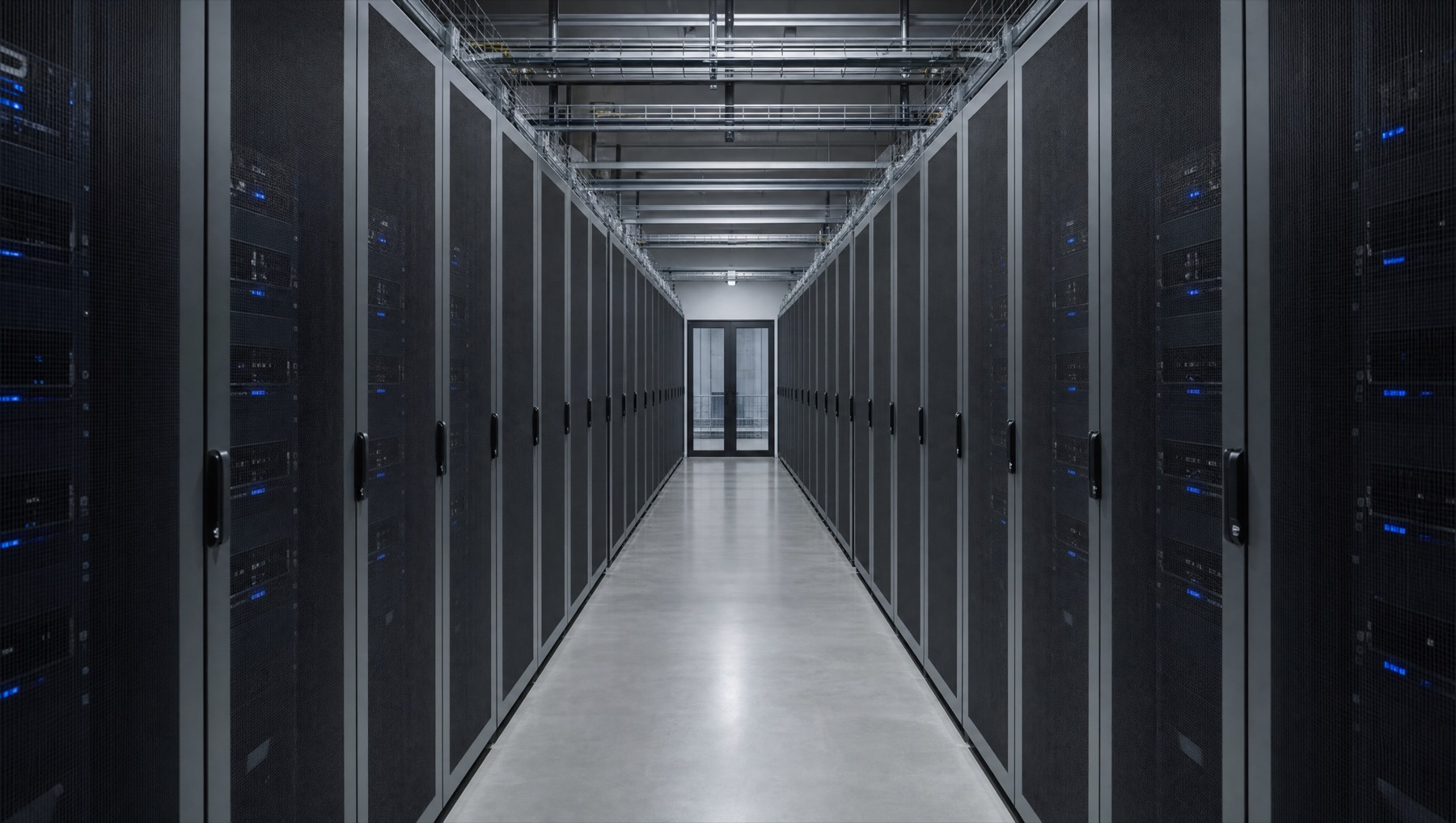
A flat 24/7 load, not a peak
AI training and inference run a near-flat load with little diurnal shape. Firm, always-on generation matches that shape; variable supply has to be oversized and backed up to meet it.
- Duty cycle
Utilization stays high around the clock, with limited room to curtail.
- Uptime
Redundancy and concurrent maintainability targets treat any supply interruption as a design failure.
- Step load
Campus demand steps up in large increments as each hall energizes.
Interconnection now sets the campus schedule
In constrained markets, queue position and transmission capacity often bind before land or capital. We coordinate interconnection and utility engagement from a site's first day.

- Market screen
We screen markets and utility territories for interconnection feasibility before advancing a site.
- Utility engagement
We engage utilities and public power authorities on how load would be served, metered, and priced.
- Existing assets
Retired generation, live substations, and transmission-adjacent land can shorten the grid pathway.
Behind-the-meter, front-of-meter, or hybrid
How much grid dependence a campus accepts is a commercial decision, not a technical default.
- On-site
Vendor-supplied generation sited at or adjacent to the campus, with grid service retained as backup.
- Private wire
Behind-the-meter delivery may reduce exposure to transmission charges and market price volatility.
- Offtake
Project financeability rests on a long-term agreement between the facility and the generation owner-operator.
Power pathways phased around compute build-out
Campuses energize in stages, and power should arrive the same way. We develop pathways that step capacity alongside hall-by-hall expansion instead of one delivery date.
- Bridge supply
Early phases may rely on grid or interim supply while nuclear procurement and licensing advance.
- Increments
Modular procurement lets capacity be added unit by unit as halls come online.
- Site optionality
Land for later phases can be secured before the technology decision is final.
Cooling, land, and setbacks decide the site
We evaluate the generation site and the compute footprint as a single site plan.

- Water
We screen water availability against the combined draw of generation and the data halls.
- Land
Setback, security-perimeter, and emergency-planning requirements imposed on the licensed operator expand acreage beyond the compute footprint.
- Workforce
Construction and operating workforce depth is assessed before a site advances.
Start a conversation.
Bender Power Corp works with power buyers, site owners, utilities, technology providers, operators, and capital partners.
Bender Power Corp does not design, manufacture, license, or operate reactors, and every pathway described here remains subject to regulatory approval, technology selection, financing, and definitive agreements.