We procure reactor technology. We do not own it.
Bender Power Corp evaluates candidate SMR and advanced nuclear designs against a specific load, site, and schedule, then seeks to procure under vendor agreements to be negotiated.
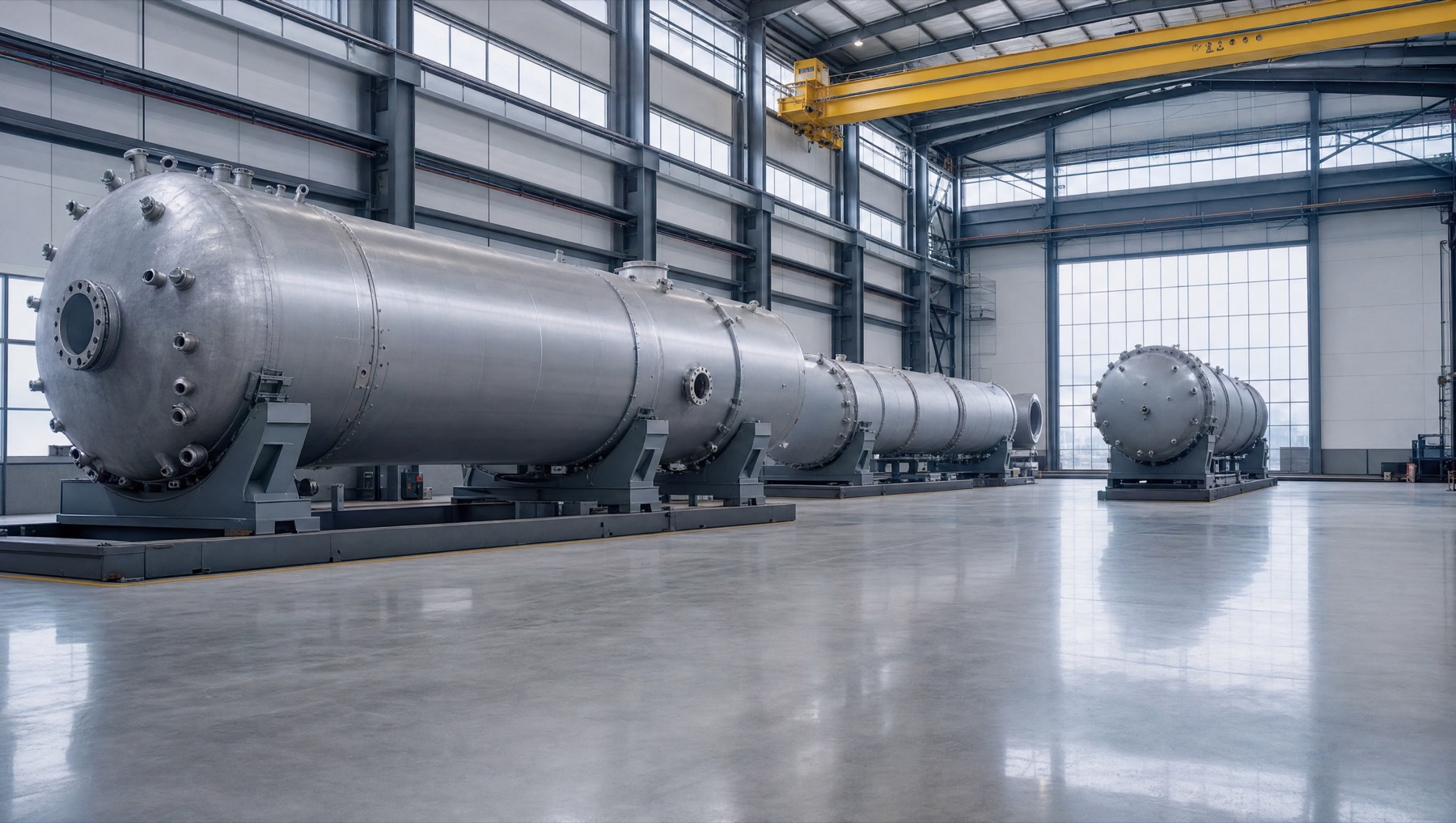
What a small modular reactor is.
SMRs are built largely in a factory rather than fabricated on site, then shipped, installed, and commissioned in series.

- Fabrication
Vendors manufacture major components off site, shifting work out of field construction.
- Scaling
Capacity can be added unit by unit as a facility's load grows.
- Footprint
A smaller exclusion envelope brings sites into play that a conventional plant would rule out.
Why modular suits constant, high-density load.
Hyperscale compute and heavy industry run flat and continuous. Modular capacity can be phased against that curve instead of committing an entire plant on day one.
- Profile
Output does not move with weather or time of day, so no firming capacity sits behind it.
- Phasing
Capital follows load: the next unit is committed once the last one is absorbed.
- Price
Long-term offtake structures are evaluated for the price visibility they can offer over a contract term.
Technology-neutral. The project selects the reactor.
We procure the technology that fits the load, the site, and the financing — not a design we are committed to selling.
- No IP
Bender Power Corp does not design, manufacture, sell, or license reactor technology.
- Vendor set
Each project runs its own vendor comparison; a design that won a previous screen does not carry forward.
- Sequence
Demand and site pathway are established before a technology is selected.
How a reactor vendor gets screened.
Screening is not a one-time pass. A vendor that clears diligence today is re-tested as licensing, supply chain, and delivery conditions move.
- Regulatory
Licensing status and certification pathway are assessed; no approval is assumed or guaranteed.
- Supply chain
We assess fuel type and availability, fabrication capacity, and component lead times.
- Delivery
Who operates the unit, the licensed staffing required, and vendor scope after handover.
Reactor choice is a site decision.
Cooling method, exclusion area, transmission access, water rights, and seismic conditions can eliminate an otherwise strong technology. We evaluate the pairing, not the reactor alone.

- Cooling
Water-cooled designs need secured water rights and discharge permits; air-cooled designs trade efficiency for siting range.
- Seismic
Seismic and hydrological conditions can rule out a design before commercial terms are discussed.
- Constructability
Road, rail, and heavy-haul access for factory-built modules narrows the viable site set.
Choices that bind for decades.
Technology selection locks in obligations that run for decades. Those are evaluated at screening, not after financial close.
- Fuel
Enrichment level narrows the supplier set for the life of the unit, so fuel route is screened before selection.
- Operations
Refueling intervals and the vendor's staffing model shape the operator's lifetime cost.
- End of life
Decommissioning funding and waste handling are built into the deal structure at screening, not deferred to the operator.
Start a conversation.
Bender Power Corp works with power buyers, site owners, utilities, technology providers, operators, and capital partners.
Bender Power Corp neither designs nor operates reactors, and every technology pathway described here remains subject to regulatory approval, licensed operators, financing, and definitive agreements.